

Noticeboard
|
Download the d.CARE application Our d.CARE application is now available for download (Google Play, App Store) to your smar... |
Getting to the clinic
Around the clinic

ABOUT THE CLINIC
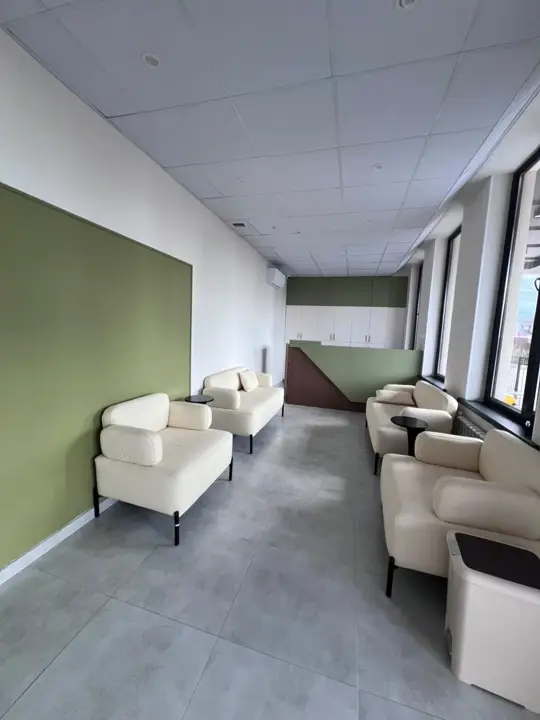
Operated by “Diaverum Distribution KG”LLP, Clinic 3701 Ak Ordo is a modern dialysis facility located in the residential area of Ak Ordo, Bishkek, at 17 Kursant Street. The clinic, known as 3701 Ak Ordo, was inaugurated in June 2026. It is housed in a three-story standalone building with parking available for 7–10 cars.
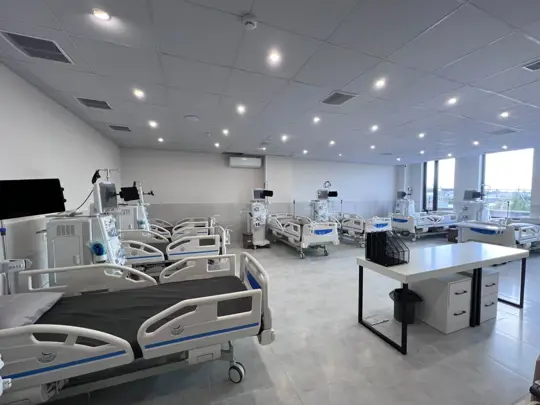
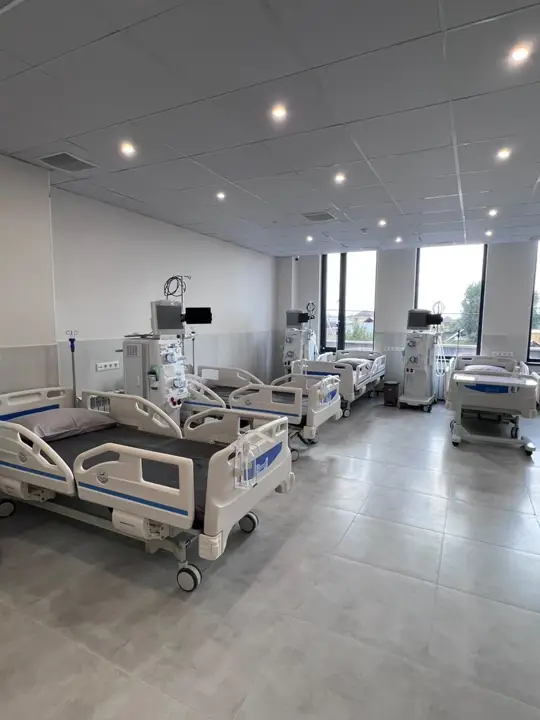
The clinic provides renal care services supported by a team of healthcare professionals and offers a personalized approach to care. Equipped with 7 dialysis machines, the center ensures reliable treatment delivery. All treatment stations are equipped with TV screens and free Wi-Fi for patient comfort.
As an integral part of its services, the clinic offers a patient education program. The team fosters a warm, family-like atmosphere and regularly celebrates events together with patients.
The clinic operates three shifts from Monday to Saturday.
About Bishkek
Bishkek is the capital of the Kyrgyz Republic, known for its green spaces, wide avenues, and proximity to the Tian Shan mountains. Key attractions include Ala-Too Square, the State Historical Museum, Oak Park, and the Osh Bazaar. The nearby Ala-Archa National Park offers scenic mountain landscapes just a short drive from the city.
Treatment Hours
Monday - Saturday |
06:00
— 22:00
|
Treatments
|
Haemodialysis |
Yes |
|
|
Peritoneal dialysis |
No |
|
|
d.HOLIDAY |
Yes |
|
|
Kidney Transplant |
No |
|
|
Patients with HIV |
Yes |
|
|
Patients with Hepatitis B |
Yes |
|
|
Patients with Hepatitis C |
Yes |
FACILITIES
Dialysis Stations |
17 |
|
Refreshments |
Yes |
|
TV screens |
Yes |
|
Free WiFi |
Yes |
|
Free transfer |
Yes |
|
Free parking |
Yes |
|
Air Conditioning |
Yes |
|
Blanket |
Yes |
|
Beverage |
Yes |
|
Sandwich/Snack |
No |
|
Warm/Cold Meal |
Yes |
Clinic Team
Asel Budaichieva |
Head Doctor |
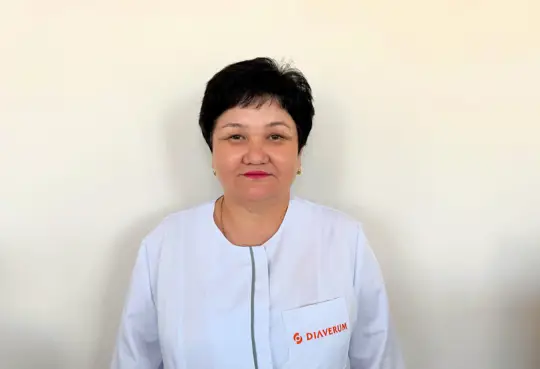
Gulnaza Kydyrova |
Head Nurse |
Useful Information/ FAQ
Upon entering the dialysis clinic, a nurse will check your blood pressure, body weight, temperature, and pulse. Then you’ll be escorted to a dialysis room, where you’ll be connected with a dialysis machine via the port. For the next three to five hours your blood will be cleansed by the dialyzer machine. During your dialysis sessions, you'll sit or lie on a recliner or bed
The dialysis treatment process can be tiring and since you can’t move around during it, it’s a smart idea to bring your books, phone or laptop, to help pass the time.
Some people report that they feel a little lightheaded during dialysis treatment. However, many people find the treatment to be pain-free and even relaxing. All our dialysis clinics have televisions and most of them has free Wi-Fi for use with a mobile device (please ask the staff for details). You may read, or talk to other patients.
Please use headphones while you watching TV or listening to the radio, so as not to disturb other patient
Remember to bring picture ID for your first treatment. Also, if you wear glasses or use hearing aids, remember to bring those with you. Bring your medication lists, laboratory results and medical history.
Wear comfortable clothes, because you’ll be spending a couple of hours in a dialysis clinic during each kidney dialysis session, it is important to dress comfortably. What you wear should be loose. Also, wear a clothing that will make it easy for your healthcare team to reach your access.
Please, also take a change of shoes with you.
An individualized treatment plan is written for each patient. Conventional hemodialysis requires visits to a clinic three times a week. Usually, each hemodialysis treatment lasts 4-5 hours.
Treatment can be changed if there are no clinical contraindications. Patients who switch from hemodialysis to peritoneal dialysis will need to have a PD catheter placed. This is usually done as an outpatient procedure.
Transportation to and from the dialysis clinic is not provided by our facility. Arrangements for transportation are organized independently by patients and/or their families.